


The racket does not operate by conspiracy. It operates by structure.
Butler’s 1935 pamphlet put the receipts on the page. The companies that profited from the First World War were not hidden. The numbers were in the public record. Butler simply gathered them and asked the country to look.
DuPont’s average annual profit in the four years before the war was approximately six million dollars. By 1916, two years into the war, DuPont’s annual profit was fifty-eight million. Bethlehem Steel ran a similar curve — single-digit millions before the war, fifty million by 1918. US Steel multiplied. International Nickel multiplied. The pattern was not the exception. The pattern was the war economy operating as designed.
Image below: Page from Smedley D. Butler, War Is a Racket (1935), Chapter II, page 4 — public domain via Internet Archive
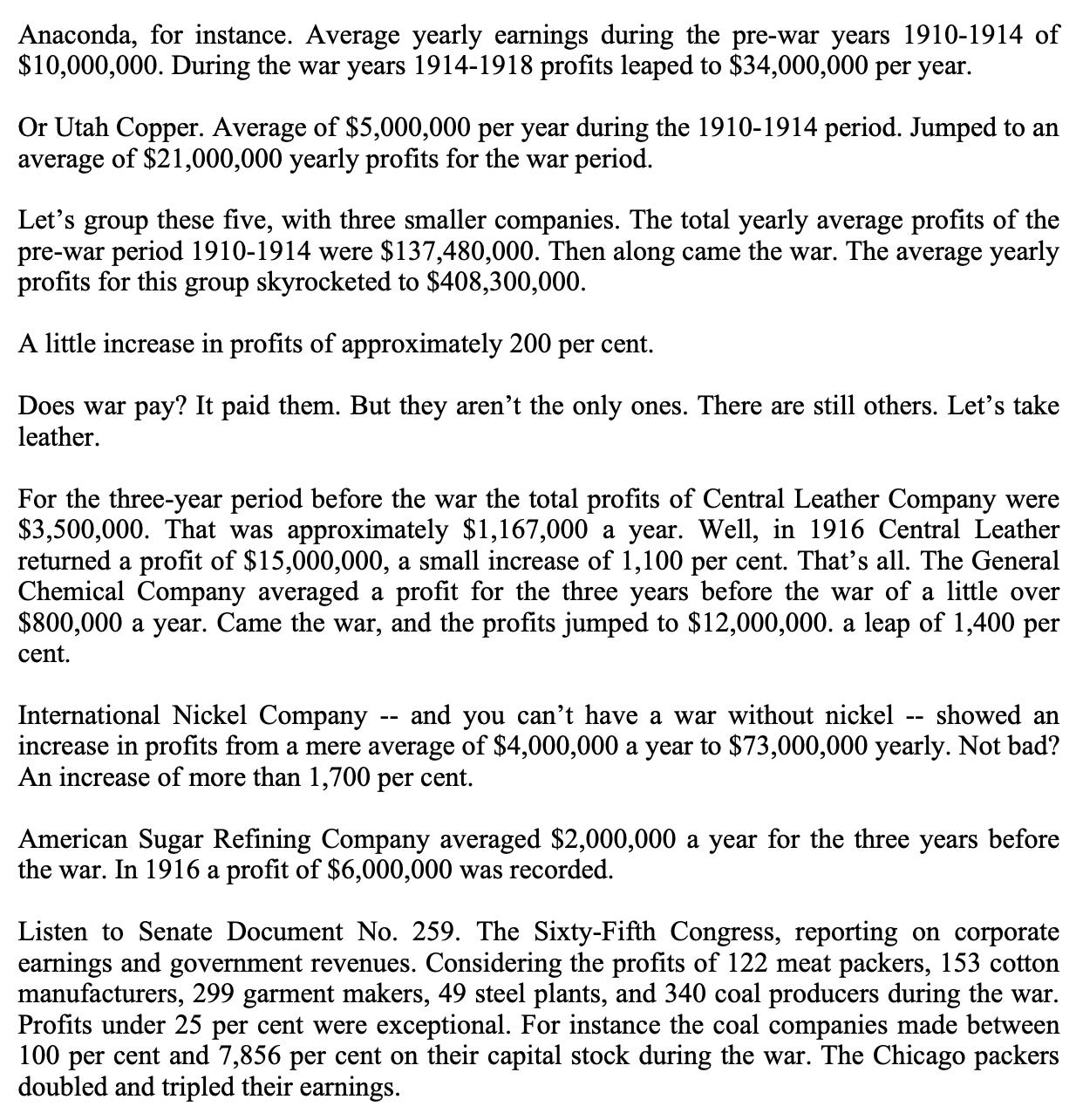
Wages did not follow the same curve. The American doughboys who fought the war drew thirty dollars a month.
Butler did not need a hidden hand to make the case. He needed only a column of numbers and the willingness to put a Marine general’s name on the page underneath them.
This is what the racket looks like when it is examined honestly. It is not invisible because someone is hiding it. It is invisible because the citizen who pays for it is rarely given the column of numbers, and is rarely told how to read it.
The someone who pays does not know there are rules. The first job of the citizen is to learn to read the receipts.
Butler’s full list of receipts is in War Is a Racket. Peace Racket, Volume I on Kindle traces the pattern forward to the present.